 Written by Patrick King · Updated
Quick Summary:
- Both Genes and Lifestyle Matter: Genetics account for 40–60% of cholesterol variation. Your genes set the thermostat — your lifestyle determines how far the temperature drifts.
- Familial Hypercholesterolemia (FH): Affects 1 in 250 people, yet 90% are undiagnosed. FH is a serious medical condition requiring a doctor’s care — not a DIY situation.
- Your Liver Makes 75–80% of Your Cholesterol: Food accounts for only 20–25%. This is why cutting eggs and shrimp changes almost nothing for most people.
- Ask for the Right Tests: Lp(a), ApoB, homocysteine, and hs-CRP reveal inherited risk that a standard cholesterol panel completely misses.
- Statins Deplete CoQ10: The same pathway statins block also produces CoQ10 — never stop medication without your doctor, but it’s worth discussing supplementation.
- Genes Are Not Destiny: Cutting sugar, adding soluble fiber, exercising, and supporting liver health all make a real difference — even with unfavorable genetics.
- Targeted Support: Cholesterol Optimizer™ is a doctor-formulated, NSF® certified formula designed to support healthy cholesterol, HDL/LDL balance, liver function, and homocysteine levels — used alongside your doctor’s plan.
Is It Your Genes Or Your Lifestyle? Here’s The Truth
It is almost never one or the other. It is both — and the ratio varies enormously from person to person.
Researchers estimate that genetics account for somewhere between 40 and 60 percent of the variation in cholesterol levels across the population. The rest comes from diet, activity, body composition, sleep, stress, and other lifestyle factors.
Think of it this way. Your genes set the thermostat. Your lifestyle decides how far the temperature drifts from that setting.
Some people have a thermostat set low. They can eat poorly and still test fine, at least for a while. Others have it set high, and even a very clean lifestyle only brings them into a moderately better range.
The biggest problem I’ve realized is that people in the second group blame themselves. They assume they are doing something wrong. Often they are not. Their biology is simply working against them, and they need a different strategy and medical guidance rather than more guilt.
What Is Familial Hypercholesterolemia (And Do You Have It?)
When people ask is high cholesterol genetic, the most serious answer is a condition called familial hypercholesterolemia, or FH.
FH is an inherited genetic disorder caused by a mutation — most commonly in the LDL receptor gene — that impairs your liver’s ability to clear LDL cholesterol from your blood. The LDL has nowhere to go, so it accumulates from birth.
Key facts about FH:
- It affects roughly 1 in 250 people, making it far more common than most people realize
- An estimated 90% of people who have it have never been diagnosed
- LDL is typically very high from childhood, often 190 mg/dL or above in adults
- It substantially raises the risk of early heart disease if left untreated
- Diet and exercise alone typically cannot normalize it
This part matters, so I want to be very clear. FH is a diagnosed medical condition and it requires medical treatment. If you have FH, or your numbers suggest you might, you need to be working with a doctor. Supplements, diet, and exercise are supportive tools that work alongside your doctor’s plan. They are not a substitute for it, and I would never suggest otherwise.
What’s important to note is that FH is highly manageable when it is identified. The tragedy is not the condition — the tragedy is going undiagnosed for decades.
5 Signs Your High Cholesterol Was Inherited
How do you know if your genes are the driver? Here are the strongest clues.
- 1. Family history of early heart disease. A heart attack, stent, bypass, or stroke in a father or brother before 55, or a mother or sister before 65. This is the single loudest signal.
- 2. Very high LDL despite a genuinely good lifestyle. If you are lean, active, eat well, and your LDL is still 190 or above, lifestyle is not the explanation.
- 3. High cholesterol from a young age. If your numbers were elevated in your twenties or thirties, that points to genetics rather than accumulated lifestyle damage.
- 4. Physical deposits. Yellow bumps on the eyelids, waxy nodules on the elbows or knuckles, a thickened Achilles tendon, or a gray ring around the iris before age 45.
- 5. Multiple relatives with high cholesterol. If your parents, siblings, aunts, or uncles all have it, a shared gene is more likely than a shared coincidence.
If several of these apply to you, bring them up with your doctor and ask specifically about screening for familial hypercholesterolemia. It is a conversation worth having.
Shocking Truth: Your Liver Makes 80% Of Your Cholesterol, Not Your Food
This is the piece that changes how people think about the whole problem.
Roughly 75 to 80 percent of the cholesterol in your body is manufactured by your own liver. Only about 20 to 25 percent comes from what you eat. Your liver produces cholesterol constantly because your body genuinely needs it — it builds cell membranes, produces hormones including testosterone and estrogen, makes vitamin D, and creates bile acids for digestion.
Here is the crucial part. Your liver has a feedback system. When you eat more cholesterol, a healthy liver makes less. When you eat less, it makes more to compensate. It is trying to hold a target.
And that target is largely set by your genes. This is precisely why is high cholesterol genetic is such an important question. If your genetic setpoint is high, your liver will keep producing cholesterol no matter how carefully you eat. You are fighting your own production line, and food alone is a small lever.
Why “Eating Clean” Isn’t Fixing Your Numbers
Now you can see why cutting eggs and shrimp does almost nothing for most people. Dietary cholesterol was never the main driver.
But there is a second reason clean eating often fails, and it has to do with what people think “clean” means.
Many people cut fat and cholesterol while continuing to eat plenty of sugar, refined flour, fruit juice, and processed carbohydrates labeled as “low fat” or “heart healthy.” Those foods drive up triglycerides, drive down HDL, and produce small dense LDL particles — which are the most damaging kind.
So the diet feels virtuous and the numbers get worse. It is genuinely maddening, and it is not your fault. You were given the wrong target.
If it was me, I would stop worrying about the cholesterol in my food and focus on cutting sugar, refined carbs, and industrial seed oils instead. That shift alone changes lipid panels far more reliably than avoiding egg yolks ever did.
Blocking It vs. Producing Less Of It — Two Completely Different Battles
There are two separate fronts in this fight, and most people only ever fight one of them.
Battle 1: Absorption
This is about limiting how much cholesterol gets absorbed from your gut into your bloodstream. Soluble fiber from oats, psyllium, beans, and apples binds cholesterol and bile acids in the intestine and carries them out. Plant sterols and stanols compete with cholesterol for absorption. This front is real, but it only addresses that 20 percent slice from food.
Battle 2: Production
This is about how much cholesterol your liver manufactures in the first place — and this is the bigger 80 percent. It is governed by an enzyme called HMG-CoA reductase, and by your genetics. This is also exactly the pathway statin medications target.
What’s important to note is that if your problem is genetic, it is largely a production problem. Attacking only absorption with fiber and diet will move the needle, but it will not solve it. You need a strategy that supports healthy production and liver function too — and depending on your numbers, you may need medical treatment. That is a conversation for you and your doctor.
The 1 Gene Your Doctor Never Tested For
If I could get one extra marker added to every standard blood panel in the country, it would be this one.
Lipoprotein(a), or Lp(a)
Lp(a) is an LDL-like particle with an extra protein attached. Your level is determined almost entirely by genetics — roughly 90 percent inherited — and it barely moves with diet or exercise. Elevated Lp(a) independently raises cardiovascular risk, and it is estimated that around 20 percent of the population has a high level.
Here is what makes it so important. You can have a perfectly normal LDL, a normal total cholesterol, and a doctor telling you everything looks great — while high Lp(a) is quietly driving your risk. It is a one-time test. You only need it once in your life, because it does not really change.
The MTHFR Connection
There is a second genetic variant worth knowing about. MTHFR affects how well you process folate and B vitamins, and variants can lead to elevated homocysteine. Homocysteine damages the inner lining of your arteries — which is what allows plaque to take hold in the first place.
If it was me, I would ask for Lp(a), homocysteine, ApoB, and hs-CRP. Those four give you a far more honest picture of inherited risk than total cholesterol alone.
Can You Beat Bad Genes? Yes, Here’s How
Here is the optimistic part, and I mean it sincerely. Genes load the gun, but they do not pull the trigger.
A genetic predisposition raises your baseline. It does not seal your fate. Gene expression is influenced enormously by how you live. Two people with identical risk genes can end up with completely different outcomes.
What actually moves the needle:
- Cut sugar and refined carbohydrates. This lowers triglycerides and shifts LDL toward the larger, less harmful particle type.
- Add soluble fiber. Oats, psyllium, beans, and apples bind cholesterol in the gut.
- Exercise consistently. It is one of the only reliable ways to raise HDL and improve insulin sensitivity.
- Support your liver. Since it produces most of your cholesterol, liver health is central rather than incidental.
- Address homocysteine and inflammation. These determine whether cholesterol actually causes arterial damage.
Genetics may mean you have to work harder than the person next to you. That is unfair, but it is workable. And it means your effort matters more, not less.
Warning: Statins Are Draining Your CoQ10
I want to handle this section carefully, because it is often misused.
Statins work by blocking the HMG-CoA reductase enzyme, which reduces cholesterol production in your liver. They are effective, and for people with FH or established heart disease they can be genuinely life-saving.
But that same pathway also produces coenzyme Q10. So when a statin blocks cholesterol production, it also reduces your body’s CoQ10 production as a side effect. Studies show statin users can experience meaningful drops in blood CoQ10 levels.
This matters because CoQ10 powers your mitochondria, and your heart and muscles are especially dependent on it. Low CoQ10 is one proposed explanation for the muscle aches, weakness, and fatigue that some statin users report.
Now the important part. This is not a reason to stop taking a statin. Never stop or change a prescribed medication on your own. If you are on a statin and experiencing muscle pain or fatigue, talk to your doctor. Ask about CoQ10 supplementation — which many physicians already recommend for exactly this reason — and ask whether your dose or medication is right for you. That decision belongs with your doctor, not with an article on the internet.
What’s important to note is simply that you deserve to know this trade-off exists, so you can have a more informed conversation.
What To Do When Cholesterol Runs In Your Family
So where does this leave you? Here is the practical plan.
- Get properly tested. Not just total cholesterol. Ask for ApoB, Lp(a), homocysteine, hs-CRP, and a full lipid panel.
- Map your family history. Find out who had early heart events and at what age. This information is genuinely diagnostic.
- Work with a doctor. Especially if FH is suspected. This is not a do-it-yourself situation.
- Fix the lifestyle drivers you control. Sugar, refined carbs, sedentary living, poor sleep, chronic stress.
- Support your body’s own machinery. Liver function, lipid metabolism, and homocysteine all respond to targeted nutritional support.
That last point is why I formulated Cholesterol Optimizer™ for my own parents over 26 years ago. Cholesterol ran in my family, and I wanted an all-in-one, doctor-formulated option to support what the body is actually doing. It is designed to support a healthy cholesterol profile within a normal range, healthy HDL and LDL balance, youthful lipid metabolism, liver health and function, and a healthy triglyceride and homocysteine profile. It uses patented, scientifically researched, non-GMO ingredients and is third-party NSF® certified for purity and potency.
To be completely clear: Cholesterol Optimizer™ is natural support to use alongside your doctor’s plan. It is not a treatment for familial hypercholesterolemia and it is not a replacement for prescribed medication. If you have an inherited cholesterol condition, your doctor directs your care. Talk to them before adding anything, especially if you are already on medication.
And be patient. Healthy cholesterol is a long-term goal. Most people retest after two to three bottles, because that is when the blood work actually tells the story.
Summary
So there you have it — a clear answer to is high cholesterol genetic and what to do about it.
Key takeaways:
- Genetics account for 40 to 60 percent of cholesterol variation, so both genes and lifestyle matter
- Familial hypercholesterolemia affects 1 in 250 people and 90% are undiagnosed — it is a medical condition requiring a doctor’s care
- Your liver makes 75 to 80 percent of your cholesterol, which is why cutting dietary cholesterol changes so little
- Ask for Lp(a), ApoB, and homocysteine — these reveal inherited risk that a normal cholesterol panel completely misses
- Genes are not destiny — cutting sugar, adding fiber, exercising, and supporting liver health all work, even with bad genes
What’s important to note is that inherited cholesterol problems are among the most manageable genetic risks there are — provided you actually know about them. Testing is the whole game.
Frequently Asked Questions
Can you have high cholesterol even if you’re healthy and thin?
Yes, and it is more common than most people expect. Body weight and cholesterol are related but they are not the same thing. Thin, athletic people can absolutely have high LDL, especially if they have a genetic predisposition or familial hypercholesterolemia. Because your liver produces most of your cholesterol and its output is heavily influenced by genes, a lean, active person with an unfavorable genetic setpoint can have significantly worse numbers than a heavier person with favorable genes. This is exactly why cholesterol screening is recommended for everyone — never assume you are fine based on the mirror or the scale.
Why is my cholesterol high when I eat well?
There are two likely explanations. The first is genetics — since your liver produces 75 to 80 percent of your cholesterol and your genes largely set that production rate, a clean diet can only influence a small portion of the total. The second is that what you consider eating well may not be targeting the right thing. Many people cut fat and dietary cholesterol while still consuming plenty of sugar, refined grains, fruit juice, and processed low-fat products. Those raise triglycerides, lower HDL, and produce small dense LDL particles. If your numbers are not budging, get tested for inherited factors and shift your focus from dietary cholesterol to sugar and refined carbohydrates.
Can genetic high cholesterol be lowered naturally?
It depends on severity, and I want to be honest rather than simply encouraging. For mild to moderate genetic predisposition, natural approaches can make a meaningful difference. Cutting sugar and refined carbs, adding soluble fiber, exercising consistently, and supporting liver health and homocysteine can produce real improvements in your lipid panel. However, for true familial hypercholesterolemia, diet and supplements alone typically cannot bring LDL into a safe range. FH is a diagnosed medical condition and requires medical treatment. In that case, natural approaches like Cholesterol Optimizer™ are valuable support alongside your doctor’s plan — not a replacement for it.
Does the MTHFR gene affect cholesterol and heart health?
MTHFR variants do not directly raise cholesterol, but they can meaningfully affect heart health through a different pathway. The MTHFR gene affects how efficiently you convert folate into its active form, and common variants can lead to elevated homocysteine. Homocysteine damages the inner lining of your arteries, and that damage is what allows cholesterol plaque to take hold. So you could have decent cholesterol numbers and still be at elevated risk if homocysteine is high. The practical step is simple — ask your doctor to test homocysteine. If elevated, B vitamin status particularly folate, B6, and B12 is usually the first line of support.
Does taking statins deplete CoQ10?
Yes, this is well documented. Statins block the HMG-CoA reductase enzyme to reduce cholesterol production, but that same biochemical pathway also produces coenzyme Q10. So statin use can measurably lower blood CoQ10 levels. Since CoQ10 is essential for mitochondrial energy production, particularly in heart and muscle tissue, low levels are one proposed explanation for the muscle aches, weakness, and fatigue some statin users experience. Importantly, this is not a reason to stop your statin — never stop or adjust a prescribed medication on your own. Instead, raise it with your doctor. Many physicians already recommend CoQ10 supplementation alongside statin therapy.
Disclaimer: This article is for educational purposes only and is not medical advice. Statements have not been evaluated by the Food and Drug Administration. This product is not intended to diagnose, treat, cure, or prevent any disease. Familial hypercholesterolemia is a serious diagnosed medical condition requiring professional treatment. Always consult your doctor before starting any supplement, and never stop or change prescribed medication without medical supervision.
Important "Healthy Cholesterol Levels" Shortcut
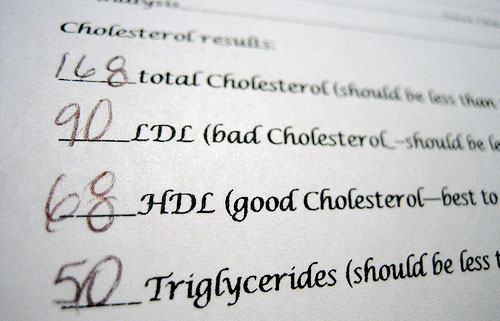
I think we can all agree that healthy cholesterol levels is very important for your health, fitness & longevity (heart & brain health, sexual performance, arteries, etc.).
Unfortunately, most of us don't have the time, money or devotion to make big lifestyle changes (diet, exercise, stress management, etc.) Plus, AGING is another major factor (not just lifestyle)...
Well, the good news is that now you can quickly achieve your "healthy cholesterol" goals with ONE simple solution that's easy, convenient & requires NO lifestyle changes...
- Nordestgaard BG, et al. Familial hypercholesterolaemia is underdiagnosed and undertreated in the general population. European Heart Journal. 2013. PubMed
- Tsimikas S. A test in context: lipoprotein(a): diagnosis, prognosis, controversies, and emerging therapies. Journal of the American College of Cardiology. 2017. PubMed
- Banach M, et al. Statin therapy and plasma coenzyme Q10 concentrations — a systematic review and meta-analysis of placebo-controlled trials. Pharmacological Research. 2015. PubMed
- Clarke R, et al. Homocysteine and risk of ischemic heart disease and stroke: a meta-analysis. JAMA. 2002. PubMed