 Written by Dr. Sam Robbins · Updated

Quick Summary:
- Normal Fasting Glucose: On a normal blood glucose levels chart, fasting glucose below 100 mg/dL (5.6 mmol/L) is normal.
- Two-Hour Test: Two hours into a glucose tolerance test, normal is below 140 mg/dL (7.8 mmol/L).
- Normal A1C: A normal A1C is below 5.7%.
- Prediabetes Range: Fasting 100–125 mg/dL, 2-hour 140–199 mg/dL, or A1C 5.7–6.4%.
- Diabetes Range: Fasting 126 mg/dL or higher, 2-hour 200 mg/dL or higher, or A1C 6.5% or higher.
- Not A Diagnosis: One reading is not a diagnosis. Only your doctor can make that call, usually after a repeat test.
You checked your blood sugar and now you’re staring at a number. Is it on a normal blood glucose levels chart or not?
You need a normal blood glucose levels chart that is clear and current.
So here is the quick answer.
Normal fasting glucose is under 100 mg/dL (5.6 mmol/L).
Normal A1C is under 5.7%.
Also, two hours into a glucose tolerance test, normal is under 140 mg/dL (7.8 mmol/L).
So today I’m going to give you a full chart for each test, in both units.
Then I’ll explain what moves your numbers up and down.
My work focuses on hormones, and insulin is one of the most important hormones you have.
Normal Blood Glucose Levels Chart (mg/dL and mmol/L)
The ranges below come from the American Diabetes Association’s 2026 Standards of Care. The US uses mg/dL. But most other countries use mmol/L. To convert, divide mg/dL by 18.
Fasting Blood Glucose
“Fasting” means no food or drinks with calories for at least 8 hours.
| Category | mg/dL | mmol/L |
|---|---|---|
| Normal | Below 100 | Below 5.6 |
| Prediabetes | 100 to 125 | 5.6 to 6.9 |
| Diabetes range | 126 or higher | 7.0 or higher |
Two Hours After a Glucose Drink (OGTT)
This chart is for the oral glucose tolerance test. First, you drink 75 grams of glucose at a lab, and they draw your blood two hours later.
| Category | mg/dL | mmol/L |
|---|---|---|
| Normal | Below 140 | Below 7.8 |
| Prediabetes | 140 to 199 | 7.8 to 11.0 |
| Diabetes range | 200 or higher | 11.1 or higher |
A1C (Average Over About 3 Months)
| Category | A1C (%) | A1C (mmol/mol) |
|---|---|---|
| Normal | Below 5.7 | Below 39 |
| Prediabetes | 5.7 to 6.4 | 39 to 47 |
| Diabetes range | 6.5 or higher | 48 or higher |
There is also a fourth test. A random reading of 200 mg/dL (11.1 mmol/L) or higher, together with classic symptoms of high blood sugar, also falls in the diabetes range.
What About 2 Hours After Eating a Normal Meal?
This is where many charts online get sloppy. The official 2-hour numbers above apply to the glucose drink test, not to your dinner.
However, we do have good data on healthy people. In one study, 153 people without diabetes wore a continuous glucose monitor for up to 10 days.
Here is what the researchers found:
- Average glucose was about 98 to 99 mg/dL in most age groups.
- People spent a median of 96% of the day between 70 and 140 mg/dL.
- They spent only about 2% of the day, roughly 30 minutes, above 140 mg/dL.
So a healthy body does rise after a meal. But it mostly stays under 140 mg/dL (7.8 mmol/L) and comes back down fairly quickly.
On the low side, a reading under 70 mg/dL (3.9 mmol/L) is generally considered low. Still, brief dips can happen in healthy people too. But if you feel shaky, sweaty or confused, tell your doctor.
What Affects Your Blood Glucose Readings?
Your number is not fixed. In fact, it moves all day long. That’s why one odd reading should not scare you.
These are the big factors:
- Food. The amount and type of carbs matter most. For example, sugary drinks and refined starches raise glucose fast. Here are 7 foods that support healthy blood sugar.
- Time of day. In the early morning, your body releases hormones that can push glucose up. Doctors call this the dawn phenomenon. Researchers have studied it for more than 30 years, mostly in people with diabetes.
- Sleep. In one study, 20 healthy men slept only 5 hours a night for a week. As a result, their insulin sensitivity dropped by about 20%. If sleep is your weak spot, see my guide on magnesium vs. melatonin for sleep.
- Stress. Stress hormones such as cortisol tell your liver to release more glucose. In that same sleep study, cortisol went up as well.
- Exercise. Working muscles pull glucose out of your blood. That’s why a walk after a meal usually helps.
- Illness and medications. Infections and some drugs, such as steroids, can raise your numbers.
- Testing errors. Sugar on your fingers, old test strips or a tiny blood drop can all give a false reading. So wash your hands first.
Sweet drinks are an easy place to start. I compare the options in my article on the 6 most popular non-calorie sweeteners.
Why Your A1C and Your Meter Don’t Always Match
A1C measures how much sugar has stuck to your red blood cells. Because those cells live for a few months, the test reflects your average, not today’s number.
That’s useful. But A1C can also mislead you. Certain conditions change the result even when your glucose has not changed.
- Iron deficiency anemia can push A1C falsely high.
- A shorter red blood cell lifespan can push it falsely low.
- Hemoglobin variants, pregnancy and dialysis can make it unreliable.
So if your A1C and your glucose readings disagree, bring it up. Then your doctor can use a different test.
A Normal Blood Glucose Levels Chart Can’t Diagnose You
Here is the crucial part. A home meter is a tracking tool. But it is not a diagnostic test.
Doctors diagnose prediabetes and diabetes with lab tests. And unless your blood sugar is clearly and severely high, the guidelines call for a second test to confirm the result.
So if your numbers land in the prediabetes or diabetes range on this normal blood glucose levels chart, don’t panic and don’t diagnose yourself. Then book an appointment and get proper testing.
Also, if you already have diabetes, your personal targets may differ from the “normal” ranges above. Your doctor sets those with you.
What to Do If Your Numbers Are Above Normal
First, the prediabetes range is a warning, not a life sentence.
The Diabetes Prevention Program followed 3,234 adults at high risk. One group aimed for 7% weight loss and at least 150 minutes of activity per week. They cut their risk of developing diabetes by 58% over about three years.
In contrast, the metformin group lowered its risk by 31%. So lifestyle beat the drug in that trial. But whether medication makes sense for you is a decision for you and your doctor.
If it was me, I would start here:
- Build meals around protein, vegetables and fiber.
- Cut sugary drinks and refined carbs.
- Walk for 10 to 15 minutes after meals.
- Lift weights two or three times a week.
- Protect your sleep.
I also use a supplement called Blood Sugar Optimizer with meals to help support healthy blood sugar levels already within a normal range.
And men, take note. Blood sugar also affects your hormones. I explain how in how high blood sugar lowers testosterone.
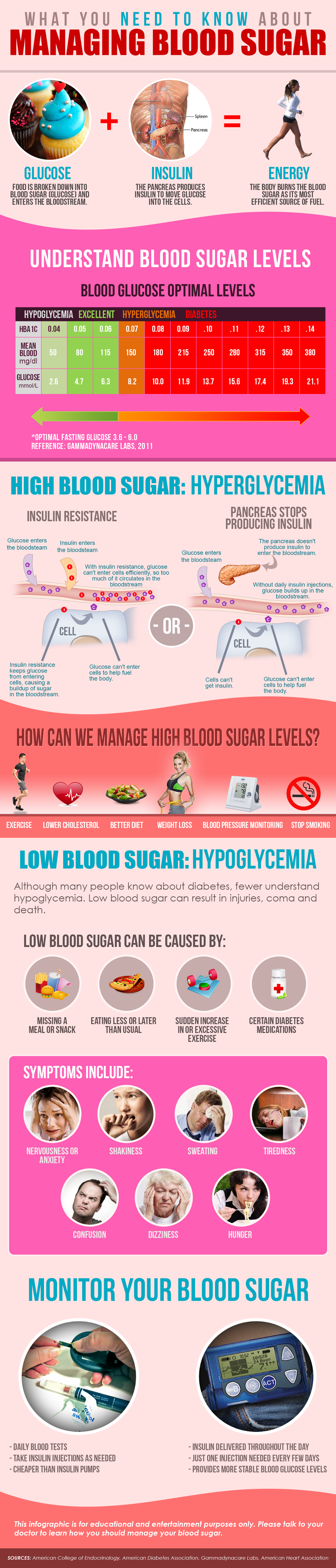
Here is my original infographic on how blood sugar, glucose and insulin work together:
The Bottom Line
In short, keep these three “normal” numbers in mind. Fasting under 100 mg/dL, two-hour under 140 mg/dL and A1C under 5.7%.
Use the chart above to see where you stand. But remember that food, sleep, stress and even dirty fingers can shift a reading.
So look at the pattern, not one number. But if your results sit above normal, get lab tests and let your doctor make the diagnosis.
Frequently Asked Questions About Blood Glucose Levels
What is a normal blood sugar level right after eating?
In healthy people, it mostly stays under 140 mg/dL (7.8 mmol/L). Still, blood sugar rises after a meal, even in healthy people. In a study of people without diabetes, glucose stayed between 70 and 140 mg/dL (3.9 to 7.8 mmol/L) about 96% of the time. But short rises above 140 can happen.
Is a fasting blood sugar of 105 mg/dL normal?
No, it is slightly above normal. That’s because a fasting level of 100 to 125 mg/dL (5.6 to 6.9 mmol/L) falls in the prediabetes range. One reading is not a diagnosis, so ask your doctor about a lab test.
How do I convert mg/dL to mmol/L?
Divide the mg/dL number by 18. For example, 100 mg/dL is about 5.6 mmol/L. To go the other way, multiply mmol/L by 18.
What A1C level is normal?
A normal A1C is below 5.7%. An A1C of 5.7% to 6.4% is in the prediabetes range, and 6.5% or higher is in the diabetes range. Still, your doctor should confirm any result.
Why is my blood sugar higher in the morning?
In the early morning, your body releases hormones that raise glucose. This is called the dawn phenomenon. Also, poor sleep and stress can add to it. If your fasting numbers stay high, talk to your doctor.
Important "Healthy Blood Sugar" Shortcut

I think we can all agree that healthy blood sugar is very important for your health, fitness & longevity (brain & heart health, muscles, fat loss, sexual performance, energy, etc.).
Unfortunately, most of us don't have the time, money or devotion to make big lifestyle changes (diet, exercise, stress management, etc.)
Well, the good news is that now you can quickly achieve your "healthy blood sugar" goals with ONE simple solution that's easy, convenient & requires NO lifestyle changes...
- American Diabetes Association Professional Practice Committee. 2. Diagnosis and Classification of Diabetes: Standards of Care in Diabetes—2026. Diabetes Care. 2026. PubMed
- Shah VN, et al. Continuous glucose monitoring profiles in healthy nondiabetic participants: a multicenter prospective study. J Clin Endocrinol Metab. 2019. PubMed
- Porcellati F, et al. Thirty years of research on the dawn phenomenon: lessons to optimize blood glucose control in diabetes. Diabetes Care. 2013. PubMed
- Buxton OM, et al. Sleep restriction for 1 week reduces insulin sensitivity in healthy men. Diabetes. 2010. PubMed
- Radin MS. Pitfalls in hemoglobin A1c measurement: when results may be misleading. J Gen Intern Med. 2014. PubMed
- Knowler WC, et al; Diabetes Prevention Program Research Group. Reduction in the incidence of type 2 diabetes with lifestyle intervention or metformin. N Engl J Med. 2002. PubMed