 Written by Dr. Sam Robbins · Updated
Quick Summary:
- The Short Answer: Here is how to raise HDL cholesterol naturally: stop smoking, do longer aerobic workouts, lose extra weight, and swap trans fats for unsaturated fats.
- Quitting Smoking: Quitting raised HDL by about 4 mg/dL across 27 studies.
- Aerobic Exercise: It raised HDL by about 2.5 mg/dL across 25 trials. The length of each session mattered most.
- Weight Loss: It helps too, but only after your weight settles. HDL can dip while you are still losing.
- Stack the Steps: Each change adds only a few points. So stack them.
- Beyond the Number: A higher HDL number is not the whole story. Drugs that push HDL up have not been shown to protect the heart.
You got your blood work back and your “good” cholesterol is low. Here is how to raise HDL cholesterol naturally, without another prescription.
Stop smoking, do longer aerobic workouts, lose extra body fat, and replace trans fats with healthy unsaturated fats.
Each one raises HDL by a few points in human studies.
That’s it. No magic pill.
So today I’m going to show you what the research really says about each step.
I’ll also tell you how big a change to really expect. That’s because most articles oversell this.
I’ve focused on hormones and metabolism for over 20 years.
Also, both of my parents struggled with cholesterol problems.
That’s why this topic is personal for me.
What HDL Is and What Level to Aim For
HDL stands for high-density lipoprotein. Think of it as a clean-up truck. It picks up extra cholesterol and carries it back to your liver.
That’s the opposite job of LDL. If you want the full picture, read my guide on what LDL cholesterol is and why it’s called “bad”.
Here are the HDL ranges most labs and doctors use:
| HDL level (mg/dL) | Men | Women |
|---|---|---|
| Low | Below 40 | Below 50 |
| Acceptable | 40 or higher | 50 or higher |
| Linked with lower heart risk | 60 or higher | 60 or higher |
But more is not always better. In fact, very high levels, above 100 mg/dL, may not add protection. So the goal is a healthy range, not the highest number.
How to Raise HDL Cholesterol Naturally: 5 Steps That Work
People often ask me how to raise HDL cholesterol naturally. So I ranked the steps by the strength of the human evidence, and I list the size of each change.
1. Stop Smoking
This is the biggest single win for smokers. A meta-analysis pooled 27 studies of people who quit.
HDL rose by 0.100 mmol/L after quitting. That is about 4 mg/dL. But total cholesterol, LDL and triglycerides did not change much.
2. Do Longer Aerobic Workouts
Exercise is a big part of the plan. But the details matter. A meta-analysis of 25 randomized trials tested aerobic training and HDL.
On average, HDL rose 2.53 mg/dL. That is modest, but real. Here is what the researchers found:
- You need about 120 minutes of exercise per week to see a rise.
- Every extra 10 minutes per session added about 1.4 mg/dL.
- How often and how hard people trained did not predict the change.
Here is the crucial part. Longer sessions beat harder sessions for HDL. So a 40-minute brisk walk may do more than a 15-minute sprint workout.
3. Lose Extra Weight, Then Keep It Off
Extra body fat pushes HDL down. A meta-analysis of 70 studies looked at weight loss and blood fats.
For every kilogram lost and kept off, HDL rose 0.009 mmol/L. That is about 0.35 mg/dL per kilogram. So losing 10 kg (22 pounds) adds roughly 3.5 mg/dL.
But there is a catch most people don’t know about. HDL dropped slightly while people were still actively losing weight. So don’t panic if your number dips during a diet. It tends to rise once your weight is stable.
4. Swap Trans Fats and Refined Carbs for Unsaturated Fats
What you eat matters too. A meta-analysis of 60 controlled feeding trials compared different fats and carbs.
The key finding is about the ratio of total cholesterol to HDL. A lower ratio is better. Here is what improved it:
- Replacing trans fats. This had almost twice the effect of replacing saturated fat.
- Replacing saturated fat with unsaturated fats. Think olive oil, nuts, seeds, avocado and fatty fish.
However, swapping saturated fat for carbs did not improve the ratio. That’s why a low-fat, high-carb diet often disappoints people with low HDL.
If it was me, I would cut the sugar and refined carbs, not the healthy fats.
So avoid “partially hydrogenated” oils. Instead, cook with olive oil and snack on nuts. For a full list, see my article on foods that increase your good HDL cholesterol.
5. Alcohol: It Raises HDL, But I Don’t Recommend Starting
The old advice says a glass of red wine lifts HDL. That part is true. A meta-analysis of 63 intervention studies found alcohol raised HDL by 0.094 mmol/L, or about 3.6 mg/dL.
The effect was the same for wine, beer and spirits. So red wine is not special here.
But if you’re asking me how to raise your HDL, alcohol is not the answer. That’s because alcohol has real risks. If you already drink, keep it light. But if you don’t drink, don’t start for your cholesterol.
How Much Can You Raise HDL Naturally?
Think of it this way. There is no single trick for raising HDL. Each step adds a few points. But together, they add up.
| Change | Average HDL change in studies | Evidence |
|---|---|---|
| Quit smoking | About +4 mg/dL | 27 studies |
| Aerobic exercise (120+ min/week) | About +2.5 mg/dL | 25 trials |
| Weight loss (kept off) | About +0.35 mg/dL per kg | 70 studies |
| Replace trans and saturated fat with unsaturated fat | Better total-to-HDL ratio | 60 trials |
| Alcohol (not advised as a strategy) | About +3.6 mg/dL | 63 studies |
These are averages. So your result may be higher or lower. For example, the exercise effect was larger in people with a body mass index under 28 and higher total cholesterol.
Why a Higher HDL Number Isn’t the Whole Story
For years, doctors believed that raising HDL by any means would protect the heart. So drug companies tested medicines that push HDL up.
But the biggest problem I’ve realized is that the number and the benefit are not the same thing.
One well-known trial added niacin to statin therapy in people with low HDL. But so far, studies have not shown that raising HDL with medicine lowers heart attack risk.
So when you think about how to raise HDL cholesterol naturally, focus on the habits, not just the number. The habits that raise HDL naturally also improve weight, blood sugar and blood pressure. That is likely where the real benefit comes from.
Also, low HDL often travels with other problems. These include high triglycerides and extra belly fat. So it helps to understand the primary causes of high cholesterol and work on the root issue.
How Long Does It Take to Raise HDL Cholesterol Naturally?
HDL moves slowly. So be patient. Give your new habits about three months, then re-test. And remember, HDL can dip while you are actively losing weight. So judge it after your weight has settled.
If it was me, I would follow this simple plan for how to raise HDL cholesterol naturally:
- Walk briskly, cycle or swim for 30 to 45 minutes, four or five days a week.
- Remove trans fats and cut back on sugar and refined carbs.
- Use olive oil, nuts, seeds and fatty fish as your main fats.
- If you smoke, get help to quit.
- Lose extra weight slowly and keep it off.
For extra support, I formulated Cholesterol Optimizer™ for my own parents over 26 years ago. It is designed to support healthy HDL and LDL balance within a normal range, used alongside the habits above.
These same foods also help your blood vessels. I cover them in my list of the best foods for cleaner arteries and circulation.
The Bottom Line
Now you know how to raise HDL cholesterol naturally. Expect a few points from each change, not a miracle. Quit smoking, exercise longer, lose extra weight and keep it off, and choose unsaturated fats over trans fats and refined carbs.
So do them together. That’s where the gains add up. Then re-test in about three months, and review the full lipid panel with your doctor, not just one number.
Frequently Asked Questions About Raising HDL Cholesterol
What is the fastest way to raise HDL cholesterol naturally?
Quit smoking if you smoke, because it gives the largest single rise, about 4 mg/dL in studies. For everyone else, longer aerobic workouts plus replacing trans fats with unsaturated fats is the best start. Then combine the steps for the biggest change.
Which foods raise HDL cholesterol?
Foods rich in unsaturated fats help most. These include olive oil, nuts, seeds, avocado and fatty fish. They work best when they replace trans fats, saturated fat and refined carbs.
How much exercise do I need to raise HDL?
Trials suggest at least 120 minutes of aerobic exercise per week. Longer sessions matter more than harder ones. Also, each extra 10 minutes per session added about 1.4 mg/dL in one meta-analysis.
Does red wine raise HDL cholesterol?
Alcohol does raise HDL by about 3.6 mg/dL in studies. Wine, beer and spirits had the same effect. However, I don’t recommend drinking to improve your cholesterol, because alcohol carries its own risks.
Can HDL cholesterol be too high?
Possibly, yes. Levels above 100 mg/dL may not give extra protection. So if your HDL is very high, ask your doctor what it means for you.
Important "Healthy Cholesterol Levels" Shortcut
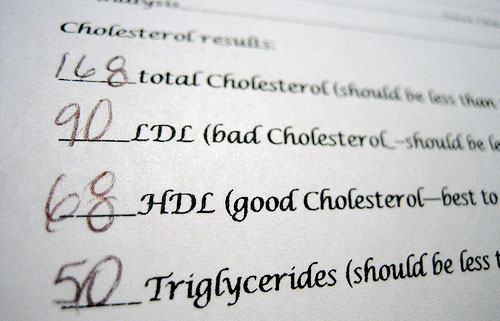
I think we can all agree that healthy cholesterol levels is very important for your health, fitness & longevity (heart & brain health, sexual performance, arteries, etc.).
Unfortunately, most of us don't have the time, money or devotion to make big lifestyle changes (diet, exercise, stress management, etc.) Plus, AGING is another major factor (not just lifestyle)...
Well, the good news is that now you can quickly achieve your "healthy cholesterol" goals with ONE simple solution that's easy, convenient & requires NO lifestyle changes...
- Kodama S, et al. Effect of aerobic exercise training on serum levels of high-density lipoprotein cholesterol: a meta-analysis. Archives of Internal Medicine. 2007. JAMA Network
- Dattilo AM, Kris-Etherton PM. Effects of weight reduction on blood lipids and lipoproteins: a meta-analysis. The American Journal of Clinical Nutrition. 1992. PubMed
- Maeda K, et al. The effects of cessation from cigarette smoking on the lipid and lipoprotein profiles: a meta-analysis. Preventive Medicine. 2003. PubMed
- Mensink RP, et al. Effects of dietary fatty acids and carbohydrates on the ratio of serum total to HDL cholesterol and on serum lipids and apolipoproteins: a meta-analysis of 60 controlled trials. The American Journal of Clinical Nutrition. 2003. PubMed
- Brien SE, et al. Effect of alcohol consumption on biological markers associated with risk of coronary heart disease: systematic review and meta-analysis of interventional studies. BMJ. 2011. PubMed
- AIM-HIGH Investigators. Niacin in patients with low HDL cholesterol levels receiving intensive statin therapy. The New England Journal of Medicine. 2011. PubMed